Lessons from the Field: My Takeaways from Nonprofit Dreamin’ 2026
There’s something that happens when you walk into a room full of people who genuinely care about making the world better — and also happen to be really good at Salesforce. You feel it immediately. The energy is different.
That’s exactly what I experienced when I attended Nonprofit Dreamin’ 2026 in Charlotte, NC. The event was held at the Foundation For The Carolinas — and if you’ve never been, it’s worth mentioning on its own. The Sonia & Isaac Luski Gallery was absolutely gorgeous, and there was something fitting about gathering in a room full of mission-driven people in a space that so beautifully reflects the spirit of philanthropy. The venue set the tone before a single session even began.
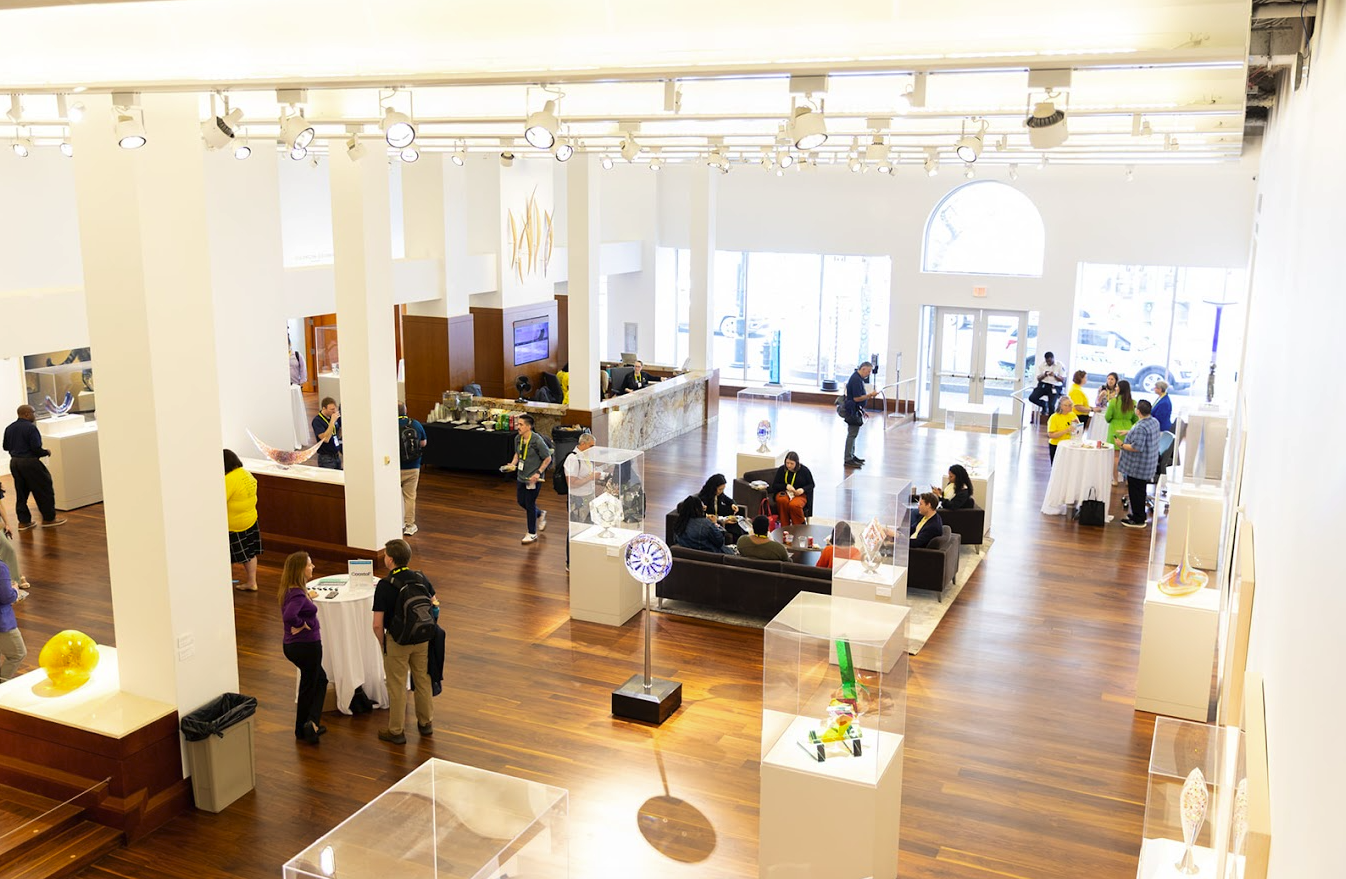
The Sonia & Isaac Luski Gallery
Why I Was There — And Why It Matters
BrightHelm Partners works with value-driven organizations like nonprofits, public sector, and faith-based institutions to implement solutions on the Salesforce platform to support and drive their missions. That's not an accident — it's a deliberate choice rooted in the belief that technology, when implemented thoughtfully, can amplify mission-driven work in profound ways.
So when a conference exists that sits squarely at the intersection of Salesforce expertise and nonprofit heart? I need to be in that room. Nonprofit Dreamin' isn't your typical tech conference. It's built by the community, for the community — and every session, every conversation, every shared frustration and breakthrough reflects the unique reality of doing complex, important work with limited resources.
Being there wasn't just about professional development. It was about learning directly from the people we serve.
The day kicked off with an opening keynote from Lavonne McLean, CEO of Apparo — a Charlotte-based nonprofit dedicated to amplifying nonprofit impact through technology and process improvement — and she set the tone for everything that followed. Lavonne spoke candidly about a challenge that every nonprofit leader in that room knows all too well: being asked to do more with less, constantly.
She introduced a framework that honestly stopped me in my tracks: the Vicious Cycle. It goes like this: nonprofits have limited resources to improve their operations, so they continue to serve with what's on hand, which leads to suboptimal outcomes, which causes them to lose funding opportunities — which leaves them with even fewer resources. And the cycle repeats.
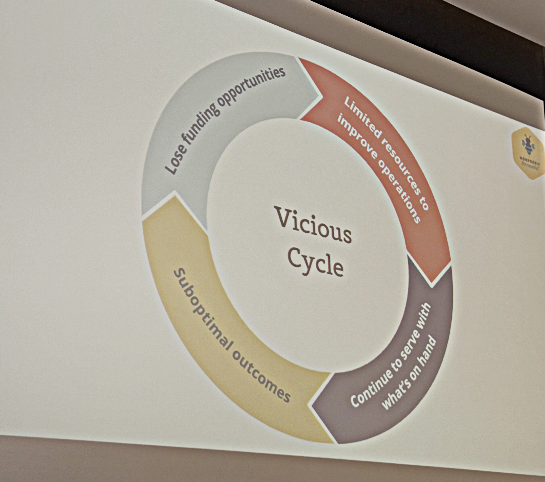
“The Vicious Cycle”
It's a painful loop. And seeing it mapped out so clearly was a gut punch in the best way — because it put into words something so many of our clients live every day.
She shared how Apparo works to break that cycle by providing free and affordable technology support — turning limited resources into capacity growth, suboptimal outcomes into improved outcomes, and lost funding into gained funding opportunities. The antidote to the vicious cycle is access. Access to the right tools, the right expertise, and the right support.
It was a powerful reminder of why the work that is done by organizations like Apparo — and partners like BrightHelm — matters so much.
From the Session Floor: What the Community Is Focused On
AI & Automation in Salesforce
I'll be honest — I walked into the AI conversations with a little bit of skepticism about whether they'd be practical or just full of buzzwords. I was pleasantly surprised.
The discussions at Nonprofit Dreamin' were refreshingly real. The speakers weren't asking "isn't AI amazing?" They were asking, "what's actually ready for us right now? How do we use this responsibly when our data isn't perfect? What does ethical AI look like in our context?"
Those are exactly the right questions — and one session in particular tackled them head on.
Skye Tyler's presentation, Reimagining Work: Human Purpose in an AI-Amplified World, was one of the most thought-provoking conversations of the day. She posed a question that I think a lot of us are quietly sitting with: What does it mean to "work" when AI can do much of what we once did? AI isn't just changing our tools — it's reshaping our roles, our skills, and even our sense of purpose.
What resonated with me most was the discussion around the irreplaceable human elements, or the things AI simply cannot replicate. Empathy. Judgement. Trust. In a sector built on human connection, those qualities aren't just nice to have. They are the work. And if anything, the rise of AI makes them more valuable, not less.
That reframing stuck with me. It's not about resisting AI — it's about being intentional about what we bring to the table alongside it.
Salesforce's AI capabilities — including Agentforce and flow-based automation — are advancing quickly, and there are genuine opportunities for nonprofits in areas like donor communications, case management workflows, and impact reporting. But the takeaway I kept hearing was this: the tool is only as good as the intention and preparation behind it. That resonated with me deeply.
Migrating from NPSP to AFNP
If there was one topic that had the whole room buzzing, it was the migration from the Nonprofit Success Pack (NPSP) to Agentforce for Nonprofit (AFNP), previously known as Nonprofit Cloud (NPC). And I get it — this is a big deal. For many organizations, NPSP has been the backbone of their operations for years. The idea of migrating to an entirely new data model can feel overwhelming, even scary.
What I valued most about these conversations was the honesty. People shared what went well, what blindsided them, and what they wish they'd done differently. The recurring themes? Start your data cleanup earlier than you think you need to. Bring your team along through change management — not just your Salesforce admin. And make sure you're working with someone who truly understands the nonprofit context, not just the technical steps.
What I'm Taking Home — And How It Shapes Our Work
Attending Nonprofit Dreamin' wasn't just a learning experience. It was a recalibration. Here's how I'm putting it into practice for our clients:
Starting AI conversations earlier and more intentionally. A lot of organizations are curious about AI but don't know where to begin — and that's okay. I'm now approaching those conversations with a clearer framework: let's assess your data readiness, identify where automation can reduce burden (not just add complexity), and build a roadmap that fits your team's actual capacity. No pressure, no hype — just honest planning.
Getting proactive about NPSP to NPC migration conversations. If your organization is still on NPSP, the time to start thinking about your path forward is now, and not when Salesforce forces the issue. A successful migration takes time, preparation, and the right partner. I'm committed to helping our clients approach this transition with clarity and confidence, not panic.
Final Thoughts
I came back from Charlotte with pages of notes, a handful of new connections, and — I won't lie — a lot of feelings. Nonprofit Dreamin' has a way of reminding you that behind every Salesforce org is a team of dedicated people trying to change something in their community. That matters. And the work we do to support them matters too.
And honestly? I left Charlotte more energized and with more conviction about the work we do at BrightHelm Partners than I’ve felt in a long time!
If you're a nonprofit or public sector organization wondering how any of these conversations apply to your world, I'd genuinely love to talk.