

Salesforce Nonprofit Insights & Blog
The BrightHelm Blog: Salesforce, AI & the Work That Matters
Practical Salesforce guidance for nonprofit, higher-education, and public-sector teams, from a veteran-owned, woman-owned consultancy. We cover Agentforce and Nonprofit Cloud, release readiness, the 2026 security changes, and what it actually looks like to use AI well. We go first so you don't have to.
Start Your Adventure With Insights From Salesforce Experts
Certified Salesforce consultants and architects, veterans, builders, and mission-driven problem-solvers writing from the work itself.
Start here ↓

From the CEO: Why We Sponsor Dreamin’ In Color
AI is quietly eating the entry-level work that builds judgment rep by rep. Why BrightHelm sponsors Dreamin' In Color and backs it with a real fellowship pipeline, not just a statement about the ladder.

The Hours After Go-Live Are Different. The Support Should Be Too.
Every Salesforce go-live has that moment: the process is live, users are logging in, and something small goes sideways a validation rule that's too strict, a Flow that behaves differently under real traffic. None of it is catastrophic, but all of it needs attention now, not next week. For years we handled that informally: "someone will keep an eye on things." But that's a hope, not a commitment. So we built Launch Watch your Project Manager, reserved exclusively for your go-live day.
What Fellowships Mean to BrightHelm
When we saw the requirements for ACHIEVEability's fellowship no Salesforce certification yet, two days a week our honest first reaction was: is that enough runway? We said yes anyway. What made two days a week workable wasn't something we built for the fellowship; it was documentation designed to teach, plus Slackbot handling the repetitive onboarding scheduling so our human hours go to coaching. There's real anxiety about AI erasing entry-level tech jobs. We used AI specifically to invest more in someone just starting out.

The Vendor You Can't Leave & Data Sovereignty
When an AI-infrastructure founder got his GitHub account flagged, the exposure he'd been warning clients about stopped being theoretical so he moved his whole git stack onto infrastructure he controlled. Most organizations never get that wake-up call; they just carry the exposure until something forces the question. But "do we control our data?" isn't one question, it's three: Location, Mastery, and Use Rights. Here's the framework, why Use Rights is the sharpest edge in the AI era, and how BrightHelm runs every tool decision through it.
Slackbot vs. Claude Tag: Running the Real Cost Scenarios
Our first part covered why Slackbot and Claude Tag are built for different jobs. This one is about the money and the pricing picture is more confusing than the vendor pages suggest. The 15-message-per-week Business+ limit that makes Slackbot a taste, not a tool; why real access means an Enterprise+ migration with lock-in in both directions; Claude Tag's different math when you're already paying for Claude; and three cost scenarios for a 50 person organization that genuinely land differently depending on where you start.
Slackbot vs. Claude Tag: Same Model, Different Job — Here's How to Pick
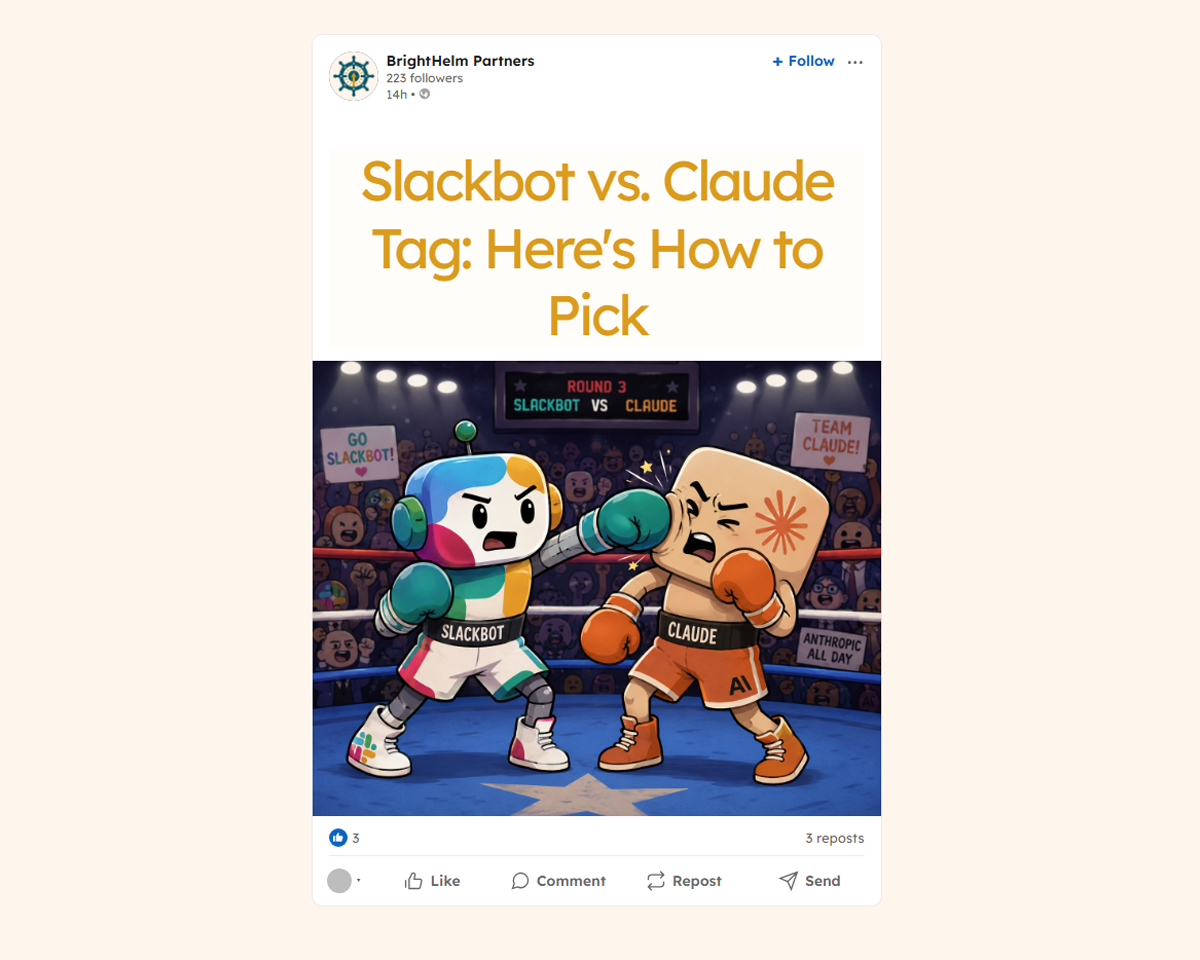
Slackbot and Claude Tag run on the same Claude model inside Slack but one is a personal agent and one is a team agent. The architectural difference that should decide which one you pick.
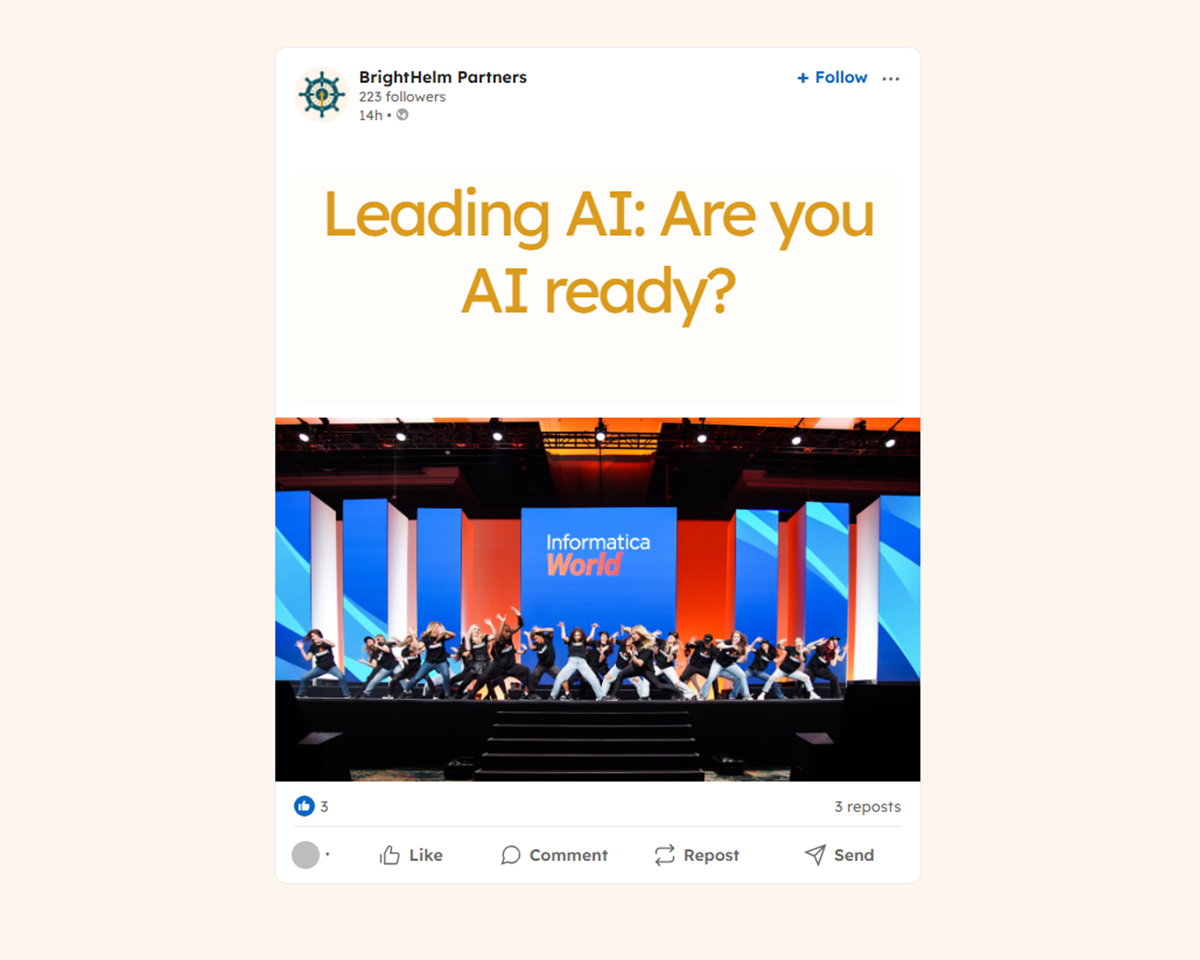
Leading AI: Are you AI ready?
Salesforce's Informatica acquisition is a bet on data as core infrastructure. An Informatica World 2026 recap on why clean data is the non-negotiable precondition for agentic AI especially for NPSP-to-AFNP nonprofit migrations.
Confident & Wrong: AI & Cognitive Surrender
A Wharton study found AI can push accuracy below having no tool at all, while raising confidence either way. Why "cognitive surrender" is a system-design problem, and where in the build lifecycle deference turns catastrophic.
Salesforce Just Confessed That Composable is Hard
Earlier this year, Salesforce acquired Contentful. If you've been following this blog, you know what I think that means: a bet on Composable content architecture, and a signal that the structured-content-as-infrastructure era is here for enterprise buyers who are ready to do the work.

Every Architecture Has a Tax. Composability Moves Yours Upstream.
Every architecture taxes you, the only question is when the bill comes due. The monolith bills you downstream and later, often under duress when you're locked in. Composable bills you upstream and now, in the discipline of getting your structure right. AI agents have made that second choice newly urgent and they're quietly pushing whole organizations into it by accident. Here's how to trace the mechanism and choose on purpose, before the pull decides for you.
Why Salesforce Needed Contentful (and What Composable Means for You)
On June 1, Salesforce bought Contentful for a rumored $1B+ and skipped the cheap move of slapping an API on the content layer it already owned. That choice tells you what an AI agent actually needs: structured pieces it can recombine, not rendered blobs it has to parse. Here's what composable really means, why architecture and single-vendor procurement are two different decisions, and the honest answer on whether any of it reaches your nonprofit or public-sector desk yet.

From the CEO: The Pathfinder Positioning That Made Us Walk Away From Jira
There's a U.S. Army badge I've always loved: the Pathfinder, a winged torch carried by the troops who go in first, into unsecured ground, to light the way for everyone behind. First In, Last Out. It's also the cleanest name for how we work and why we just walked away from Jira, the industry standard, after running our actual business on it. A partner who'll tell you what to skip is worth more than one who only tells you what to buy.
Slackbot Rocks Finale: The Honest Gotchyas & What We Wish Existed
The honest finale to our Slack Enterprise Grid series: Canvas sprawl, the hygiene habits that suddenly matter, and the management gaps to govern early because Slack's creation tools have outpaced its management tools.
Slackbot Rocks Part 2 - Slackbot Is Not What You Think — It's Better
Slackbot cleared half our automation backlog in a week. Part 2: why Skills make Flows obsolete, naming agents as governance (meet Sparks), and why Slackbot mirrors back exactly how clean your workspace really is.