
From the CEO: The Pathfinder Positioning That Made Us Walk Away From Jira
There's a badge in the U.S. Army that I've always loved. It's a torch, lit and winged, the flames swept back so you can tell it's moving — being carried, fast, by someone running ahead in the dark. It's the Pathfinder Badge. In the Army, Pathfinders are the troops who deploy ahead of the main force — into unsecured ground — to navigate the terrain and set up the drop zones and landing zones everyone else will use. They go in before it's safe. Their motto is four words: First In, Last Out.
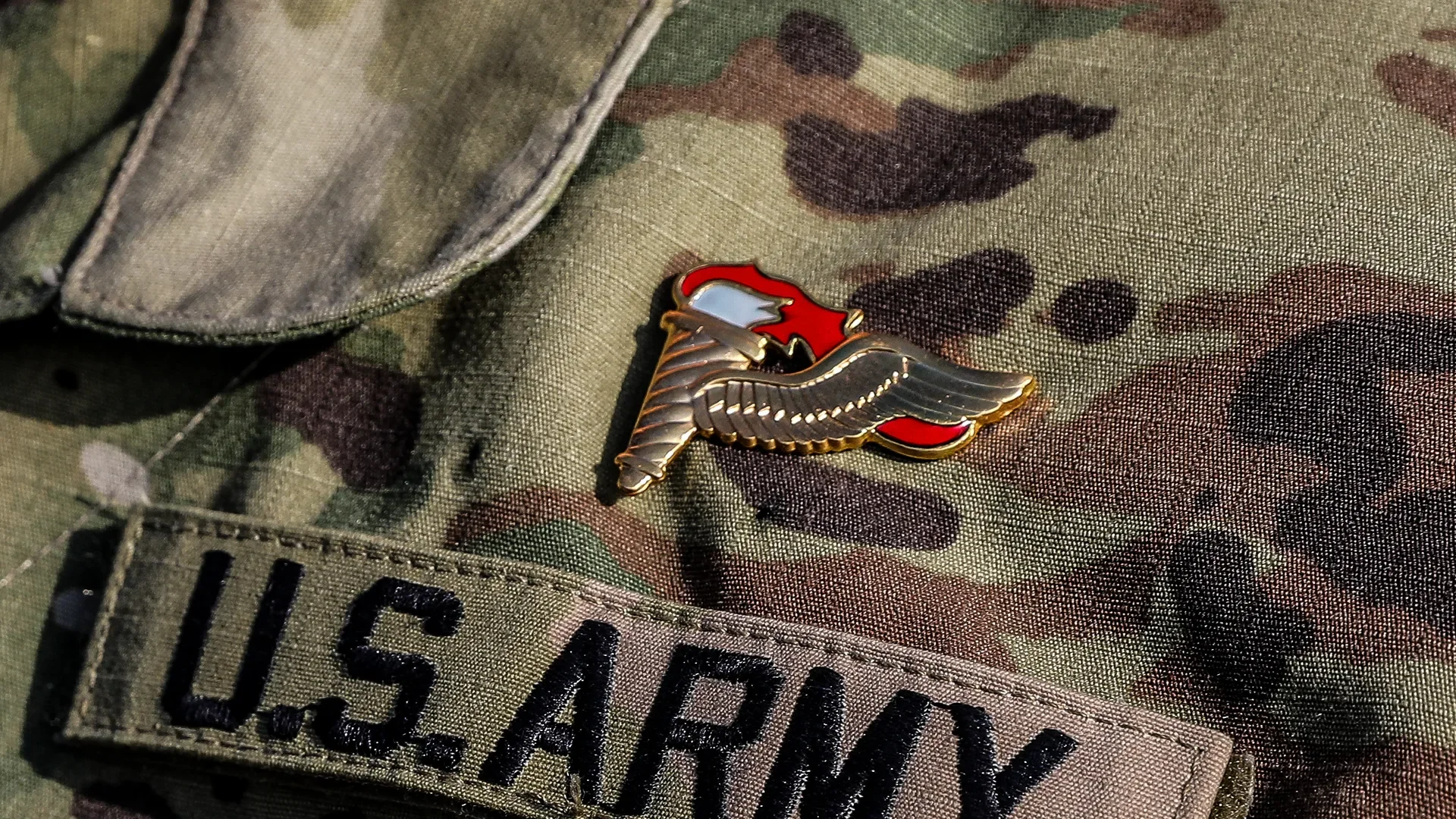
The US Army’s Pathfinder Badge
The choice of a torch isn't an accident; the makers of the Pathfinder badge were intentionally invoking ancient history. It reaches back to the runners of ancient Greece who carried fire to open the Games, and it means exactly what it looks like: the Pathfinder's job is to light the way for the people coming behind.
That image has a quieter cousin in the faith traditions a lot of our clients come from. In liturgical processions, the Gospel is carried in flanked by candles — and those candles are called torches. The practice remembers the early Christians in the catacombs, where worship happened underground and someone, simply, had to go first with a light so the others could follow through the dark.

Torchbearers at St. Martin’s Episcopal in Houston, TX
Different eras, one act. Someone goes ahead into the unknown, takes the risk of going first, and carries a light back for everyone behind them. It's one of the oldest human gestures there is. And — at a much smaller and far less heroic scale — it's the thing I most want BrightHelm to be.
So let me tell you about the time we got it wrong on purpose: We tried Jira. It didn't work for us. We are in the process right now of walking away.
That's a strange thing for a technology consultancy to admit out loud. Jira is, more or less, the industry standard — the default answer to "what should we manage the work in?" Saying it wasn't for us sounds a little like a carpenter sheepishly returning the hammer. But the fact that it's the standard is exactly why the lesson was worth what it cost us. We didn't read a comparison chart and form an opinion. We adopted it, ran our actual business on it, hit every place it fought against the way we work, and concluded — with receipts — that it was the wrong fit for BrightHelm. We lived it.
And here's the thing about that kind of knowledge: you cannot get it secondhand.
You can read every review, sit through every demo, absorb every vendor pitch, and you still will not know what it is like to run your business on a tool until you have actually done it. Reviews tell you what a thing does. They don't tell you what it's like to depend on it on a Friday afternoon when something breaks. They don't tell you where it quietly costs more than its price tag, or which celebrated feature you'll never once use, or the small daily friction that compounds into a tax on your whole team. That wisdom only exists on the far side of committing. There is no shortcut. You make the leap, you take the risk, and you let the experience teach you what no one could have simply told you.
We've come to believe that absorbing that risk is the job — the part of the work that never shows up in a statement of work, and the part we care about most. Inside BrightHelm, we have a name for it: Pathfinder Positioning. When a client comes to us, they're usually standing at the edge of a decision we've already made ourselves, on our own money and our own time. We range ahead deliberately — into tools, configurations, and use cases where the right answer genuinely isn't settled yet — so that when a client reaches the same fork, the risk has already been walked out of it. They follow in our wake. First In, Last Out. That's what they're really buying: not a recommendation pulled off a chart, but the hard-won judgment of a firm that went first and came back to tell the truth about it.
Which is why the Jira story isn't a detour from how we work — it's the cleanest example of it. Going first means sometimes you find out a thing doesn't work, and saying so is just as valuable as a glowing endorsement. Arguably more, because nobody puts the failures in the brochure. A partner who will only ever tell you what to buy is worth less than one who will also tell you what to skip — and why, and under what conditions that might be different for you.
So where did walking away from Jira leave us? It sent us back, with conviction, toward a platform we already believed in — and made us double down on running our own operations on Salesforce. Why we made that bet, and what it's been teaching us, is a longer story than this one. We'll carry that torch into the open soon.
For now, the principle is enough, and it's old enough to trust: the most valuable thing a partner can hand you isn't a list of best practices. It's the willingness to go first, into the dark, and bring back a light.
First in. Last out. 🔥