Slackbot vs. Claude Tag: Same Model, Different Job — Here's How to Pick
Yes, I'm going to say "it depends." But stick with me — because in this case, what it depends on is surprisingly specific, and once you understand it, the right answer for your organization becomes pretty clear.
If you’re in the technology space, you’re probably awash in news and takes on the new Claude Tag announcement.
Here's what it looks like from my vantage point: practitioners hear that both Slackbot and Claude Tag run on Anthropic's Claude model, both live inside Slack, and both read channel history — and they conclude this is basically a marketing distinction. Salesforce has sought to frame the two as complementary and not competitive options, but it feels like the community isn’t buying it. The discourse is that it’s a showdown at the Slack corral, and you’re either #TeamClaude or #TeamSlackbot. Or at very least that the two are redundant, substitutional options.
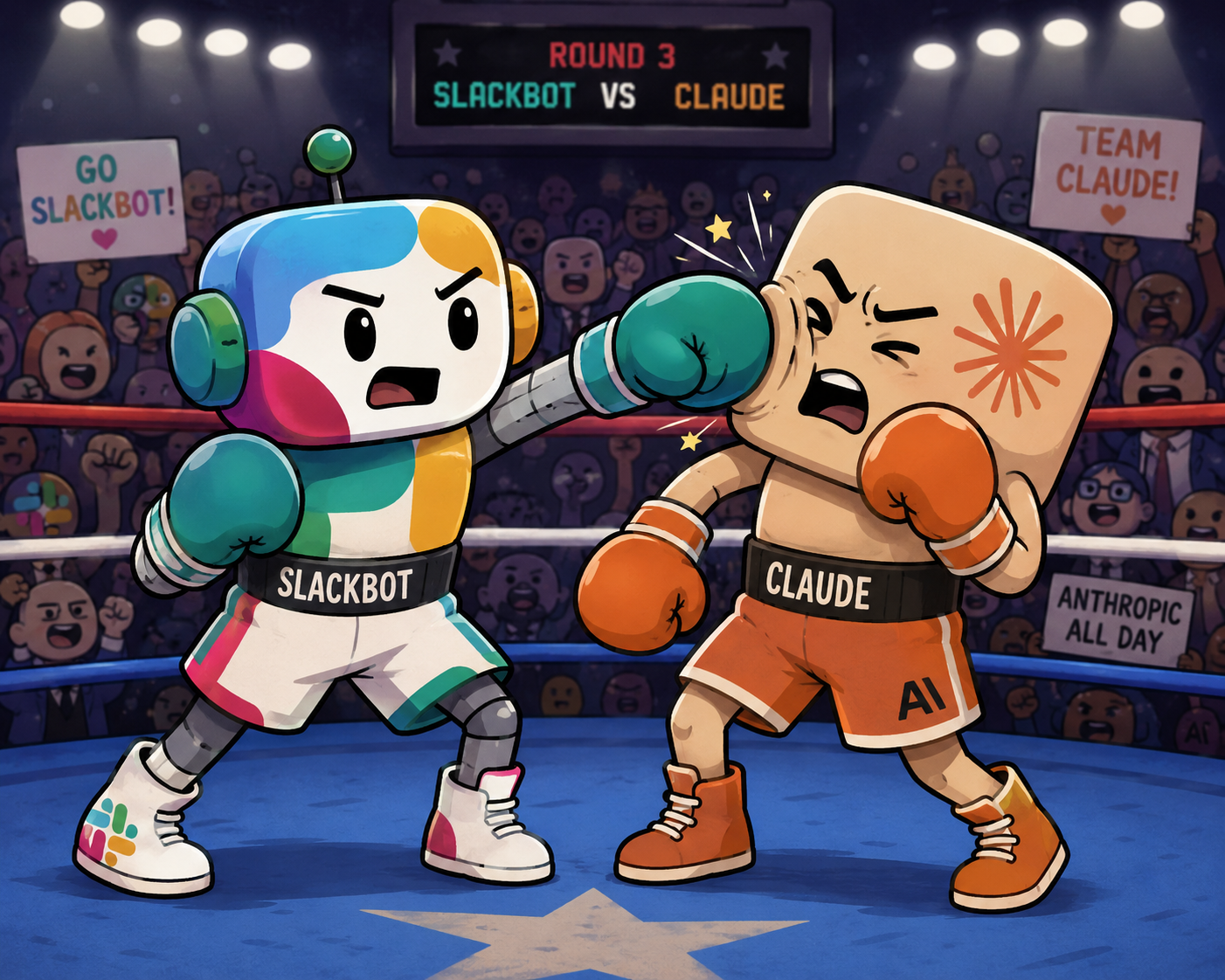
Slackbot & Claude Tag in competition for the job of your AI Assistant in Slack
That conclusion is going to cost people. The surface similarity is real. The architectural difference underneath it is also real, and it determines which tool actually solves your problem.
They're Built for Fundamentally Different Jobs
Slackbot is a personal agent. It's built around you — your role, your calendar, your communication patterns, your Salesforce records. Understanding why it’s built that way requires understanding how it actually builds that picture.
Slackbot pre-indexes your Slack workspace continuously. Every message passes through a processing pipeline within milliseconds of being sent — indexed, structured, made queryable — so by the time you ask a question, months of conversation history is already ready to retrieve. That's what makes Slackbot feel instant and context-aware. Your Salesforce data works a little differently: it's queried on demand through the base Slack-Salesforce connection when you ask for it, not pre-loaded. But the effect is seamless — Slackbot draws on your workspace history, your connected apps, and your personal patterns to give you a personalized answer. Think of it as a really well-briefed executive assistant who knows your schedule, your deals, and how you like to communicate. Everyone in the workspace has their own Slackbot experience because the context grounding Slackbot is highly personal. Your channels, your messages, your Salesforce access.
Claude Tag is a team agent. It's built around the channel — the work happening there, the decisions that have been made, the threads that are unresolved. Admins (and users, depending on the setup) add it to specific channels. Its context model works differently too: Claude Tag builds knowledge by being present in a channel over time, reading as things happen, accumulating working knowledge of that specific team's language and patterns. It doesn't pre-index your whole workspace. What it has is deeper and more specific: a genuine understanding of this channel's history, decisions, and open questions. External data sources — Salesforce, GitHub, whatever your admin has connected — are fetched on demand via Anthropic's MCP integration when a task requires them.
There's one Claude per channel, shared by everyone. When someone tags @Claude, the whole team sees what it's working on and anyone can pick up where someone else left off. The memory belongs to the channel, not to any individual.
The grounding difference matters practically: Slackbot is broad and fast across your whole workspace. Claude Tag is deep and contextual within its channel. Neither is better — they're optimized for different things with different access.
That single distinction — personal and broad vs. team and deep — cascades into everything else.
How Each One Reads the Room
This is where the architectural difference really shows up in practice.
Slackbot is excellent when the intent is role-based and personal: preparing you for a meeting, summarizing what you missed while you were heads-down, drafting a follow-up in your voice. It knows your corner of the organization.
Claude Tag is excellent when the intent is embedded in collective work: the thread from three days ago that nobody resolved, the decision that got made in a channel but never actioned, the pattern across multiple people's contributions that no single person could see.
Consider a message like: "Can someone loop in the right person on the Hendricks event — it's going sideways."
No explicit action request. No keyword that maps to a predefined task. Slackbot, reading your personal context, might surface that Hendricks is in your accounts and offer to draft a follow-up for you. Claude Tag, reading the channel's accumulated history, might recognize who Hendricks is, when the event is, flag the urgency, surface the last three decisions the team made about that account, and tag the right person — all without being explicitly asked to do any of that.
Neither response is wrong. They're solving different problems for different people.
How to Pick
Here's the practical version.
Slackbot is likely right for you when:
Your primary need is individual productivity — catching up, meeting prep, drafting
Salesforce CRM data is a core use case (Slackbot has a direct native connection — more on that in the pricing post)
You need AI that works for everyone in the org at zero marginal cost and minimal setup
Change management is a real concern and you need the simplest possible rollout
Claude Tag is likely right for you when:
Specific teams need to delegate multi-step work and get results back hours later — not just chat responses
Work is collaborative and multiple people need to pick up the same task
You're synthesizing across multiple data sources — Salesforce plus GitHub plus HubSpot plus calendar — not just CRM
You're already paying for a Claude Team or Enterprise plan for other reasons, which makes Tag essentially free to activate (but not to use, cautions coming)
“Both” is a real answer — but it needs deliberate governance. Some organizations genuinely need individual AI assistance (Slackbot) and team-level AI execution (Claude Tag). The challenge is that there's currently no official playbook for running both simultaneously. You need to design the governance — who uses what when, spend controls, admin responsibilities — before rollout, not after.
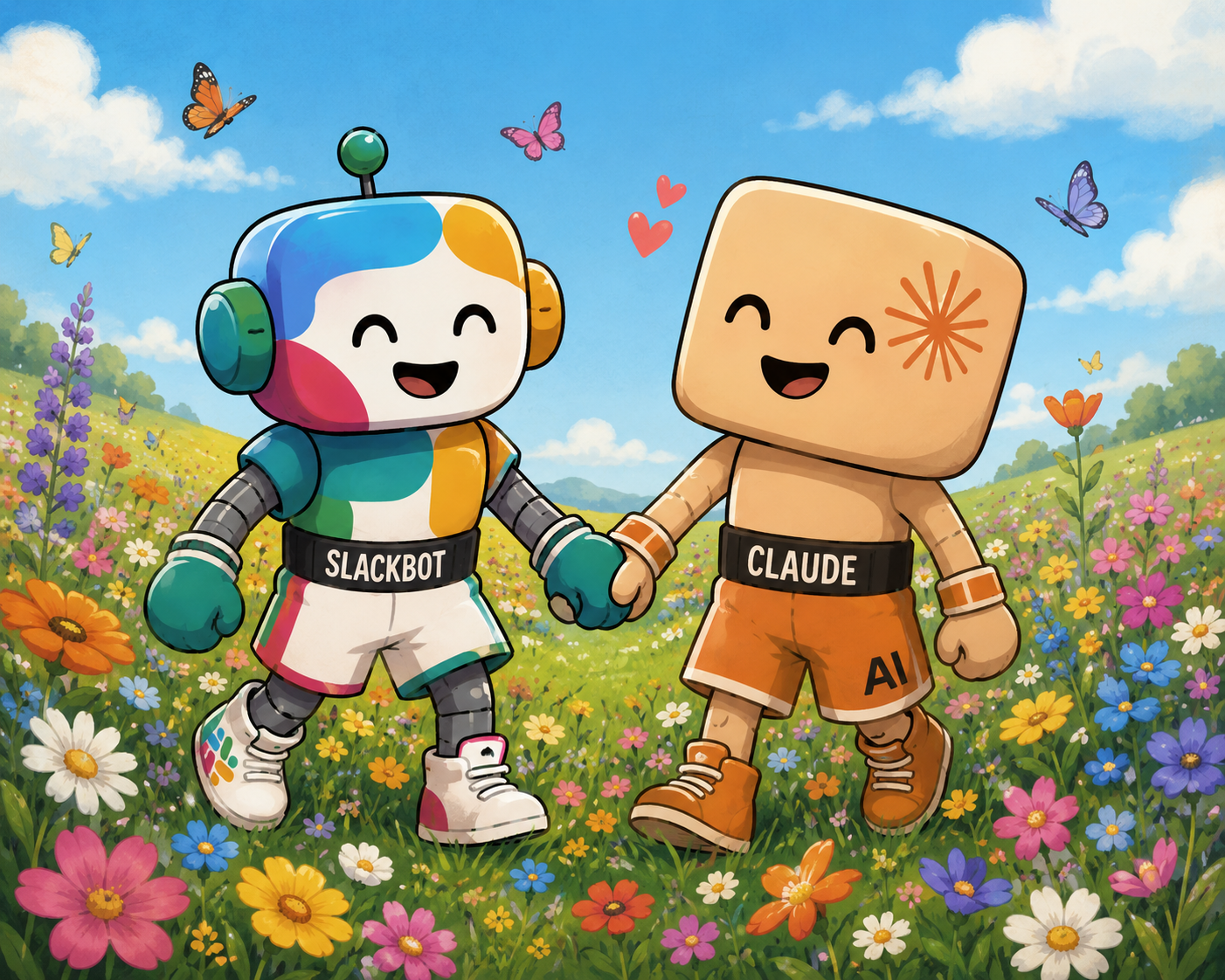
Slackbot & Claude Tag can coexist happily in the same Slack Instance
The Bigger Picture
What's happening in Slack right now is one of the most contested spaces in enterprise AI. Slackbot, Claude Tag, OpenAI Workspace Agents, Perplexity's enterprise Computer agent — everyone is racing to be the ambient AI that lives where your team already works and builds organizational context over time.
The organizations that get this right won't necessarily be the ones with the most sophisticated tools. They'll be the ones that understood the difference between personal comprehension and team execution before they bought anything.
That difference is real. It's not marketing. And it's what your decision should hinge on.
Next up: what Slackbot and Claude Tag actually cost, what you have to commit to before you can access meaningful functionality, and how to run the scenarios for your organization. Including the Business+ throttle Salesforce isn't advertising very loudly.