Dreamforce - A First-Timer’s View
“So, how’s your Dreamforce?” I heard this question more times than I expected over the course of last week. I learned that it was an easy substitute for the standard conversation opener “So, how’s your day?” or “What did you think about x, y or z?”
I wanted my first time at Dreamforce, Salesforce’s annual flagship conference, to be a great experience, with as much impact on my professional year as it seemingly has for others. It is huge, with about 50k attendees and plenty of on-site support for security, lunch distribution, and groundskeeping, and it’s chock-full of opportunities for learning from Salesforce experts. However, I found it challenging. I think that this may be yet another example about how there are no shortcuts in Salesforce. You have to invest time to understand the product. Turns out the same is true of the conference. So here's what I learned, the hard way and the easy way, that I hope pays off next year.
Early birds really do get worms: I’m glad I chose to arrive in San Francisco over the weekend, giving me enough time to orient myself to my hotel, pick up my badge early, and even see a few sights around the city, during a delightful stretch of non-foggy weather. I even had time to attend a Day 0 reception for the Salesforce Military group, which meant that I already made a few new connections before the conference officially started. I’d recommend doing that again.
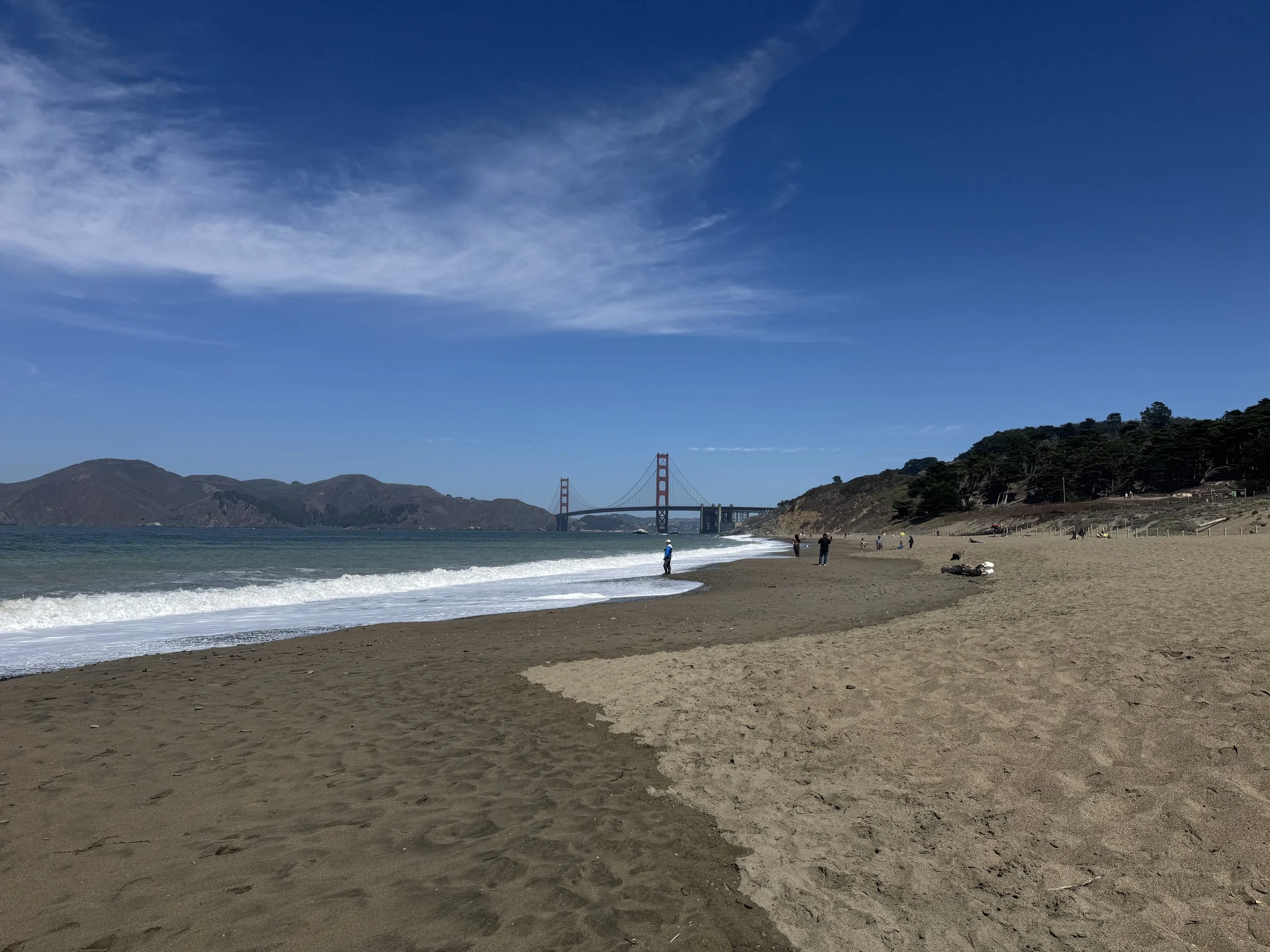
View of the Golden Gate Bridge from Baker Beach (note: not a postcard)
Real talk: no amount of preparation can completely eliminate the friction in your schedule that results from navigating the security barriers that keep unticketed folks out of the Dreamforce grounds. Leaving flexibility in my schedule for serendipity and for processing info and new connections from the last session meant that I had unused and unusable chunks of time in the middle of my days. I assumed I’d have time to make good decisions in between sessions as my sense of the conference increased. I ran out of energy for this. (As a happily remote worker, being surrounded by that many people tends to drain my social battery faster than I realize.)
My kryptonite: I expected all the third party software vendors to be more prominently positioned, so you couldn't get through to sessions without having to pass by them, like at other conferences I have been to. But at Dreamforce, the vendors were concentrated in the lower level of one building, which made it easy for me to avoid. Riffing with people I haven't met about products I've never heard of is not my idea of a good time, or even a good use of time, so I’ll be making a note of the vendor location next year and avoiding it. If this is your thing, though, rest assured that you’ll find plenty of vendors who are prepared to ply you with pitches and swag.
Mushy, heart-warming moment: I love hearing stories about how people have solved problems or improved functionality through the joys of relational databases. I went to one session about a Bay Area nonprofit that has plans to combine the data management for their twelve different service offerings for aging populations into one Salesforce org. They have started the process with one program on Nonprofit Cloud, and expect to see significant economies of scale and better context for supporting clients as the data is layered over time. This was a great story, but 20 minutes wasn’t long enough to get into the juiciest details. Another presentation on the benefits of agents for nonprofits included impressive numbers about reductions in hours spent on closing cases, but it seemed like the same reduction would have been achieved with an adequate spam filter. In the future, I’ll adjust my schedule to see if the longer sessions are better at hitting my learning sweet spot.
Rookie mistake: I expected the True to the Core session to be more about the core functionality of Salesforce. I didn’t realize it was structured as a Q&A between disgruntled (or at least inquisitive) users and the appropriately matched Salesforce product manager. It was useful to hear that Salesforce staff are working to make their Help articles more readily usable by various AI engines, and that Claude would be used to clean up all the Idea Exchange submissions that have accumulated, but I could have read about that in an article rather than sitting through the wordy prepared questions.
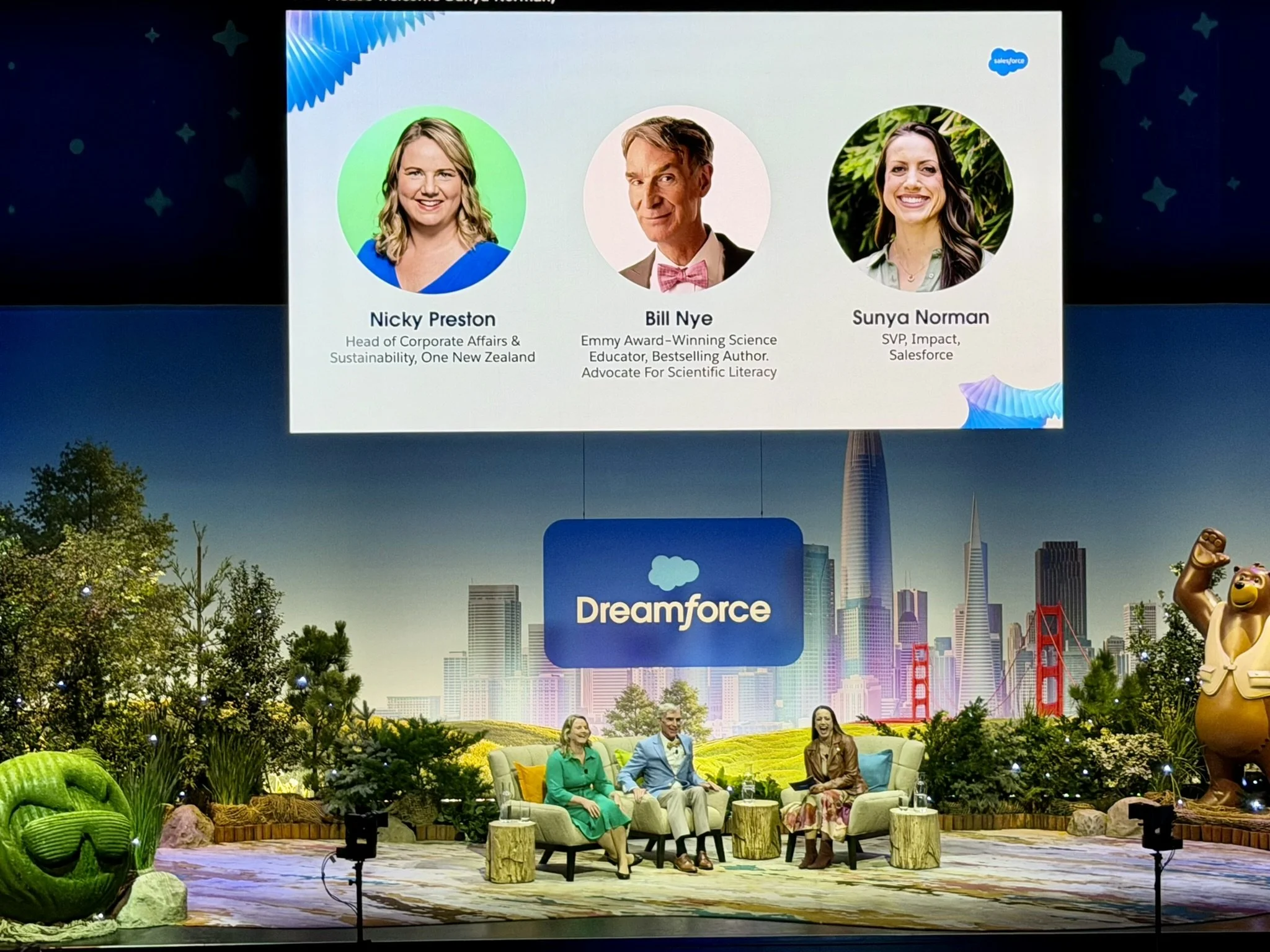
Science for the win! My favorite presentation was given by Bill Nye and Nicky Preston of One New Zealand. This included a good mix of impressive data, inspirational advice (invest the time to educate everyone, from students to users, about how electricity works, so they’re excited about contributing to conservation efforts), positive spins on AI (AI is great for optimizing micro-sleep schedules for generators, which help to squeeze more value from the same amount of energy) and humor. Bill received the biggest cheer I heard all week with his admonishment that the biggest possible positive impact for the world can be gained by providing clean water, internet access and renewable energy in order to raise the standard of living for women and children. More of this, please.
True to my core: I had more success from attending the nonprofit-focused meet-ups. I do truly enjoy meeting new people and hearing their stories. No adjustment needed here.
A few days removed, here are my takeaways for next year: arrive early, skip the vendor floor, chase the meetups and the good speakers, and treat the 20-minute sessions as trailers, not features.